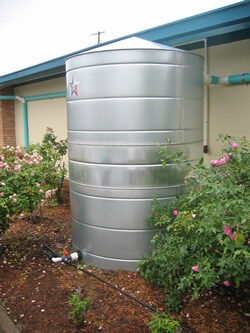
Rainwater harvesting is the practice of capturing and storing rainfall from rooftops or other catchment surfaces so it can be used later. In Texas, this approach helps reduce demand on municipal water systems, strengthens drought resilience, and supplies high-quality water. It’s a practical alternative water source that also reduces runoff, erosion, and surface water pollution. Systems can serve landscaping, livestock, in-home needs, and fire protection.
Rainwater can be used for nearly any purpose that requires water. When properly treated and installed in accordance with local codes, rainwater harvesting systems can also be configured to provide potable water for entire homes in many areas.
All systems — simple or complex — include five basic components: a catchment surface, conveyance, storage, distribution, and treatment.
Use the Rainwater Calculator to explore how rainwater harvesting works for any scenario. Clearwater UWCD provides a sponsorship for the Rainwater Calculator project which supports continued development, data updates, and education resources.
Calculate Your Rainwater
Harvesting Potential in Bell County
The Rainwater Calculator is built specifically for Texas and uses location-specific historical rainfall data to estimate water capture and recommend a tank size tailored to your needs. Unlike many rainwater calculators that rely on citywide or county averages, this tool turns decades of monthly rainfall history into practical capture estimates in metrics such as potential yield, firm yield, and dry years. It includes tank sizing guidance, estimated system costs, and an interactive tank simulation you can explore month by month. It’s a powerful and user-friendly tool.